What is Orkut?

I’m glad you asked! Known by some, Orkut was a social networking service owned and operated by Google. As a way to meet new people, maintain existing relationships, and make new friends, the service was designed to help users do just that. In honor of the website’s creator, Google employee Orkut Büyükkökten, the website was named Orkut.
Orkut was wildly popular, but we hadn’t heard about it since most users (about 90%) were from Brazil. Brazilian culture places a high value on social media and digital channels, making Brazil one of the strongest markets for online retailers. Initially, this is what made Orkut so successful. The platform provided its users with the option to join and interact within communities, just like many other social networking platforms.
Now that we know a bit about Orkut, let’s explore how this company swept social media in the early 2000’s
What made Orkut popular?
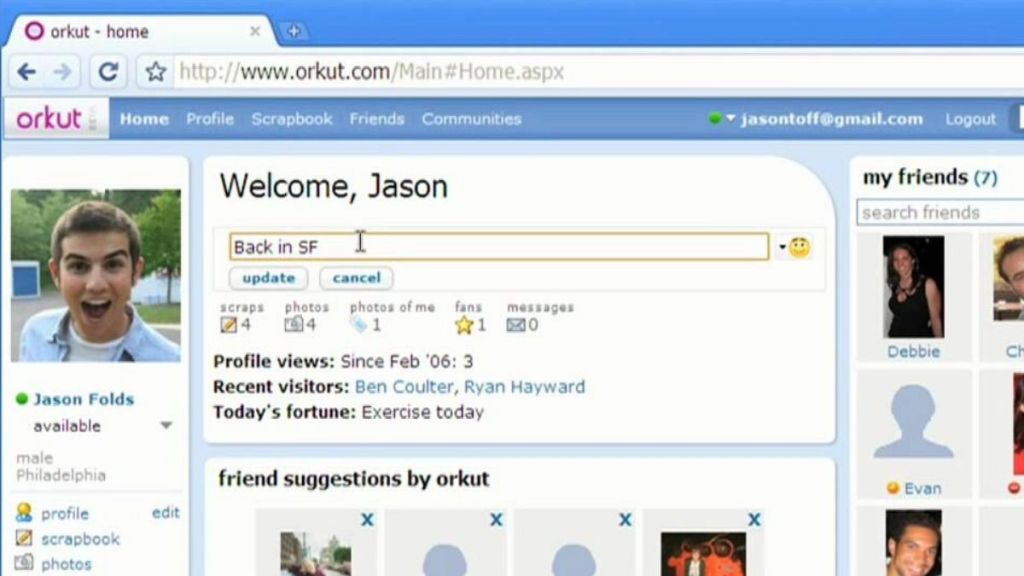
You are probably thinking that their popularity was a result of what you read above, but it goes deeper than that. As an example, users could “rate” others according to their appearance, trustworthiness, or even how cool they were. It was initially possible for anyone to visit Orkut’s profiles unless they were on a person’s “Ignore List,” as opposed to Facebook, where one can only view profiles of people in one’s network. However, it was later changed so that users could choose whether to show their profiles to all networks or only select networks. In addition, members could customize their profiles and restrict who can see information on their profiles.
What drove it to success?

Great question! In part, Orkut’s success can be attributed to Brazil’s tech-focused culture. In fact, some studies suggest that Brazil’s cell phones outnumber the country’s population! As a result, Brazil has the fifth largest online market in the world! Approximately 80% of social media users in the country are positive about online shopping, and many use social networks to research products and share recommendations. With Orkut, users were able to make product and service suggestions to friends within the communities they were a part of. In this case, the company made a smart decision and proved that success is a result of satisfying customers’ needs.
How did they fail?

In order to achieve success, it is essential to meet the needs of the consumer. For a brand to stay competitive, continuous improvement is key, and unfortunately for Orkut, it wasn’t able to do so. In addition, Brazilians responded well to brand strategies involving online video and streaming, which Orkut could not support. Aside from the video issue, users were also experiencing problems uploading and sharing photos, and they had difficulty connecting with friends. Because all of these things were important to users, they began exploring other social networking websites. In its place, brands that were able to meet the changing needs of users replaced Orkut.
 Bethea Blog